Join hosts George Suttles, Executive Director, and Amanda Novello, Sr. Policy and Research Analyst, in this episode of "Espresso Chats," a series by the Commonfund Institute serving up strong, short shots of governance and leadership insight.
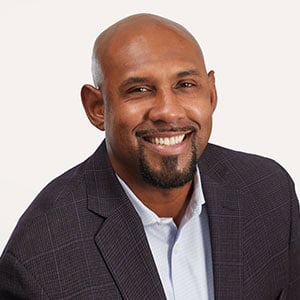
In this episode, Brian Flahaven, VP of Strategic Partnerships at CASE, discusses the fundraising and philanthropic landscape facing schools, colleges, and universities today. The conversation covers key trends in giving — including the persistent "dollars up, donors down" phenomenon — and examines how the One Big Beautiful Bill Act introduces both new incentives and new limitations for charitable giving. Flahaven also shares how institutions can sharpen their narrative around the value of education and highlights the work of the Charitable Giving Coalition in preserving and expanding the charitable tax deduction.
Hello everyone, this is George Suttles, Executive Director of Commonfund Institute. And I'm Amanda Novello, Senior Policy and Research Analyst at Commonfund Institute. This is Espresso Chats, a podcast by Common Fund Institute where we deliver short, strong shots of governance and leadership insight. We are absolutely thrilled to be joined today by a friend and partner of the institute, Brian Flahavn, VP of Strategic Partnerships at Case. Thanks so much, Brian, for joining us. Thanks, it's great to be here. First of all, Brian, before we get started, and I'm sorry to sort of task you with such a task, but can you briefly explain to us what CASE means, what CASE does, and your role as VP of Strategic Partnerships? Sure, George. And thanks again, as I said, it's wonderful to be here. So CASE stands for the Council for Advancement Supportive Education. We're the global professional association for professionals working in advancement at schools, colleges, universities. So that's both private K-twelve schools, but also colleges, universities around the globe. So the way we define advancement are really kind of four discipline areas. So that's development and fundraising, there 's alumni relations, communications and marketing and advancement services, so we serve members in all of those disciplines. As the Vice President of Strategic Partnerships for Case, I oversee our global advocacy efforts, but I also work with the firms that support companies and support the companies that support our educational institutions, schools, colleges, universities, similar to those firms like Common Fund, and also support our fantastic team that's based in Mexico City that supports our Latin America region. So I've actually been at for eighteen years, so I've had more than two decades of experience advocating on issues of importance to both education and the charitable sector. And I have to say in my time at Case George, I've had the privilege of working closely with you, Amanda and your colleagues at the Common Fund Institute. So we're so grateful for our longstanding partnership with Common Fund Institute and all the work that you do. Thanks Brian and we're incredibly grateful as well. You covered a lot and so that's why we're excited to talk to you broadly about fundraising and philanthropic environment, especially related to the education sector. As you know, we work with higher ed and independent schools. We also recently put out the NACUBO Common Fund Study of Endowments, as well as the Common Fund Study of Independent Schools with NBOA. In both of those studies, gifts and fundraising are a prominent theme. What do you see? What are key trends and drivers sort of around gifts and fundraising right now? Well, it's a great question. And let me first say that as an advocate for the sector and somebody who's up on Capitol Hill lobbying and talking with lawmakers, I love reports like the NACUBO common fund study for endowments and the common fund study of independent schools. They just give us reports, the data that we need to help make the case for how important charitable giving is to schools, college and universities. So thank you for your continued work and obviously in partnership with the other associations you mentioned. In terms of overall fundraising trends, I would say generally speaking, fundraising is up. And of course we have to acknowledge that as we look at fundraising, we have to look at the data as of there's a little bit of a lag in the data because we report back on a previous fiscal year. But if you look at the latest overall giving data first to the charitable sector overall in the U.S. According to Giving USA, giving was up about six percent in twenty twenty four, that's about three point three percent or so accounting for inflation. So giving was up. And if you look at giving to education generally, just specifically in education was up thirteen percent, so strong giving. In the latest case insights for voluntary support of education, which is our own kind of snapshot of data for colleges and universities, we saw in the most recent data that we shared, which would have been the July twenty twenty three to June twenty twenty four fiscal year, so again, there's a bit of a lag. We saw giving grow to sixty one billion dollars among those who take the survey and at which represented about three percent growth. So certainly giving is increasing. But having said that, even though overall giving is increasing, we are starting to see some concerning trends. There's been a long term trend that we call dollars up, donors down, where we've started to see really for the past couple of decades, both donors to education in the broader charitable sector decline. So the number of American households, the Lilly Family School of Life, he's done some studies on this that have shown that we now are under fifty percent in terms of the number of American households that give to charity, whether that's education or other charities, so that's concerning. And if we look at our own data at CASE, the CASE Insights for Voluntary Supportive Education, we've certainly seen a decline in the overall number of donors and alumni donors over the last few years. So is a concerning trend we need to not only obviously increase dollars, but we also want to increase the number of donors that we're seeing give to our institutions. I also want to say in terms of the NACUBO common fund study of endowments, we've also seen a decline in giving to endowments and I know the most recent study showed that fundraising and giving to endowment has gone down. And so that certainly is a concern. Some of that is donors wanting to make more impact quickly and less the longer term than endowed giving shares. Others could be related to perception of college and universities right now, or concerns about those resources getting taxed at the federal level, which of course that some institutions and private institutions that's happening, but either way, we've seen a decline there. So we certainly are concerned about that. I would just close by saying that we also know that from looking at fundraising generally, need to change from the traditional ways of fundraising and start to look at how we increase and engage new next generation givers and how we increase the pipeline of giving. That's why growing the number of donors is so important and why you see institutions doing things, these are schools, colleges and universities doing things like more giving days and kind of really time limited, quick focused efforts to raise funds for the institution directly. So I would say while overall the trend for fundraising is up, at least based on the lagged indicators we have, there certainly are some concerning trends that we need to address. Thanks, Brian. That was a really helpful lay of the land and even added some tips in there, which was great. I want to turn to policy specifically and how that might impact trends. So can you share what's happened in the past year or so? Of course, the one big beautiful bill act was signed into law in, July, I believe, enacting sweeping changes across policy areas. But what's gone into effect so far and how do you think that's making an impact? And not to tag on too many questions, but are there any other kind of policy or regulatory changes that listeners should be aware of? Yeah, that's a great question. And you're absolutely right. The one big beautiful bill act, which I call OBBBA, I know a lot of people have different shorthand names for it, is certainly been the most significant and I would argue actually has been the most significant legislation to impact the charitable tax deduction since its inception over a hundred years ago. So hasn't gotten a lot of headlines, but it's certainly going to have an impact on charitable giving and giving to schools, colleges, universities and charities beyond that. So the bill does about, there's four major policies that I want to point to that changes that I think it's important for your listeners to know. And that one is there's now a good, the good news is there's a new charitable deduction for non itemizers. So Americans, the overwhelming majority of Americans who now don't itemize their tax returns before this bill went into law, you couldn't deduct any of your charitable giving. Now, starting in this tax year, and it's important to note in this tax year, so for the taxes you file in twenty twenty seven, the tax year twenty twenty six for the first time, there will be a deduction for charitable giving for non itemizers. So really exciting, it's limited to a thousand dollars for individuals in cash gifts, dollars two thousand for joint filers, but certainly an effort to get at that dollars up, donors down phenomenon by hopefully increasing the number of donors giving to charity. While there's that positive piece, there's also some provisions that actually will increase the cost of giving for particularly for itemized givers. One of those is a zero point five percent floor on adjusted gross income for taxpayers, for itemizing taxpayers. And what that means is essentially, if you're a donor who gave twenty thousand dollars to a school in twenty twenty five, you were able to deduct that twenty thousand dollars starting this year in twenty twenty six, you'll be able to deduct only fifteen thousand of that twenty thousand if you have an income of a million dollars. So that first point five percent of your income is not deductible. So that was a revenue raising provision that was in the bill. On top of that, there's also a cap for high income givers that's at thirty five percent. So what that means is if you're a donor who's in the thirty seven percent tax bracket, the highest tax bracket that's now permanent because of the OBBBA, instead of saving zero three seven dollars on the dollar, you only save zero three five dollars on the dollar through charitable giving. And of course, the cost of that goes up as you give a larger gift. Certainly concerning from our perspective because we want to encourage those with means to give more and more to charity, we don't want to increase their cost of giving, we want to increase their increase or decrease the cost of giving for them. So certainly that new limitation we're concerned about. And then the final piece for corporate givers is there's a new floor as well on corporate giving, it's a one percent floor on corporate taxable income for C corporations. So for companies that give to local organizations and charities and others and to schools, college, universities, that's going to increase their cost of giving as well. Though I think a lot of times companies of course are giving for philanthropic reasons, also a lot of them are giving for bottom line reasons to support the communities that they're in. So we'll have to see how that will all play out. So all in all, some significant changes that are going to be in this bill that are going to impact charitable giving moving forward and we certainly at CASE have been talking with our schools, college, university members urging them to promote the new charitable deduction for non itemizers, but also to educate their staffs and donors about these new limitations that are in effect and it certainly could impact donor behavior moving forward. One final issue I'll just mention briefly, just because I know of how much of a leader Common Fund has been on looking at endowments, but there is also an increased endowment tax on certain private colleges and universities that was in the bill. It actually is going be on the number of universities that are subject to this tax has gone way down. So it doesn't raise as much revenue as it used to, but for those who are still subject to the tax, the tax went up significantly. So really large private colleges and universities that have significantly large endowments are now going to be paying more in endowment tax. And of course, Case, we think endowment tax is our bad policy because they redirect charitable resources away from their charitable purpose. And in this case, they just go back to pay for other parts of this bill, but certainly something that everyone should be aware of that the presence of an endowment tax could dampen giving to endowments, not only at these institutions, but generally. Brian, I wanna jump in really quickly because it seems like you've got the components of a really comprehensive sort of narrative storytelling and communication strategy, especially for colleges and universities, and then maybe even for independent schools. So from your perspective, because I know that's a part of the work that CASE does, what's the story, what's the narrative that we need to take control of in the sort of higher ed and independent school space? Because you hear a lot of other narratives externally swirling around about higher ed and independent schools, but what's the narrative that we need to be weaving together comprehensively for the public? Well, it's a good question, George. And I think it really goes back to the mission of our institutions and what they stand for. And it's a little bit different for college universities versus schools. In the independent school space, the school space right now, I would say from the posture of policymakers and particularly the federal government, there's a pretty advantageous viewpoint of private education. Another provision that's in this bill that is a new provision is a new tax credit for scholarships to K-twelve education, which could generate some additional giving. So you can see that there's a real focus particularly supporting private education from the administration. On the other hand, there's been a lot of concerns the administration has voiced, and when I say the administration, the Trump administration has voiced around colleges and universities and activities on college campuses, and so a lot of times the endowment tax, which was, again, it raises revenue, but actually raises less revenue now, but it goes after institutions in particular has the most burden on institutions that have been the most focused on by the administration. So I think we, a sector need to focus on talking about the value that our institutions provide, the benefits they provide beyond just who they provide to those who go walk through the doors of our schools, colleges, universities, but to the communities that they're in, to society at large, for those universities that do research funding, for example, that that research funding is critical to local communities, but also to States and the country as a whole, and frankly, the globe as a whole. So we need to do a better job of communicating that. And when it comes to charitable giving, we need to have policies that incentivize more giving to our institutions so that we can bring those additional resources to bear on the missions of our institutions, particularly at a time of particular challenge with struggling government budgets and tight financial circumstances. The ability to bring in additional resources to build endowments during this time is just critical to the future sustainability of colleges, universities and schools. So we have a lot of work to do ahead of us, but I think it's important to remember why we're in this work, why we care about the institutions we care about and why they're so valuable to society and to continue to make that case. Thanks, Bren. Before we close out, I just want to give you a minute to share about the charitable giving coalition. So now more than ever, maybe it seems like the sectoral coalition building is really important. So can you just share more about that? Any wins or efforts in the works going on with the coalition? Yeah, thanks Amanda. I would say that, you know, I have the real privilege of chairing the charitable giving coalition, which is a broad coalition of more than sixty charities, faith based organizations, associations, and foundations that are really united by one goal and that's preserving and expanding the charitable tax deduction. So there are a lot of the names of charities, whether, know, CASE obviously is involved in it, but NACUBO, which we talked about earlier, the American Red Cross, United Way, Association of Fundraising Professionals, Faith and Giving Coalition, YMCA, all, you name a bunch of charities are all part of this coalition, but we've all come together again to preserve and expand the charitable deduction. And we had a really big win this year with the charitable deduction for non itemizers, I talked That was something that we had built really since the Tax Cuts and Jobs Act passed in twenty seventeen, through our work had built bipartisan support for expanding the charitable deductions and non itemizers saying that it was important that all Americans had some incentive to give to charity and to help us reverse again, that donors down trend. So I would say that's probably been one of our biggest wins, but we've also had wins back, we've been around since the charitable giving coalition has been around since two thousand and nine. One of our biggest wins though, was there were some efforts to really clamp down on the value of the charitable deduction and raise some revenue early in our existence. And actually was, we talked about some of the changes that have happened under Republican administration. It was actually a democratic administration with the Obama administration who had talked about reducing the value of itemized deductions for high income taxpayers. And we were able to prevent that from happening to help fund other issues, but to really make the case strongly up on Capitol Hill and with the administration of the importance of making sure that those who have the resources to give are incentivized to give more, that the charitable deduction actually is a benefit you get for the more you give away, which is something we should encourage. So we've had some big wins, we've got more work to do, we obviously have to see how these new limitations are going to play out in the tax code, but I always encourage anybody interested in learning more about the charitable giving coalition to visit our website, which is just www.charitablegivingcoalition.org and check things out and feel free to reach out if you have questions as well. Awesome, thanks Brian. So we talked about fundraising and the philanthropic environment more broadly. We talked about the OBBBA the public policy implications there, especially as it pertains to charitable giving and philanthropy. And you shared really good information about the charitable giving coalition. As we close, we like to lean into both hope and strategy. So tell us what is exciting right now about your role, about the role of your organization and the work that it's doing in the field more broadly? Sure, well, it's a great question. And can tell you that as somebody who advocates on behalf of schools, colleges and universities every day, I love representing the institution we represent. They're so critical to our country, to our communities. So I never have trouble sleeping at night representing who we represent and how important the role that our institutions play. I also say I'm excited and really motivated by this from a philanthropy perspective and the fact that we do have this new charitable giving incentive for non itemizers and it impacts an ability to democratize giving. And if we can encourage institutions and schools, colleges, universities to promote this new incentive, I think it could unlock a significant number of new donors to our institutions and some new giving to our institutions, which is, as I mentioned is critical. But I think the final thing I'll say is I just love representing schools, college, universities, the advancement profession, I think it's so critical to institutions right now and it really motivates me to make sure that those institutions have the tools and the resources they need to support their vital mission. So the work that we do at CASE, the work you do at the Commonfund Institute together supporting the profession to me is really motivating and I'm always optimistic about the future of what our institutions can do. Amazing, Brian, thank you so much. We are grateful to you for your friendship, your leadership and your partnership. Thanks so much for coming on the show. We really appreciate it. Thank you. Thank you, George and Amanda, appreciate the invitation and appreciate all your work. If you liked this conversation and wanna hear more from leaders in this field, visit www.commonfund.org/espressochats to view the full playlist and subscribe on your preferred podcast platform. See you next episode. Bye.
Additional resources:
- Charitable Giving Coalition website
- CASE Summary of Key Provisions in the One Big, Beautiful Bill Act
- CASE Insights on Voluntary Support of Education
View the full playlist and subscription options for this podcast here.