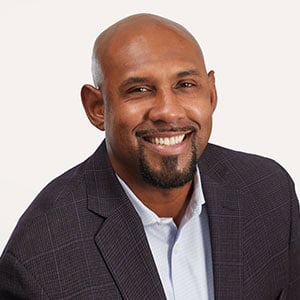
Join host George Suttles, Executive Director of Commonfund Institute in this episode of "Espresso Chats," a series by the Commonfund Institute serving up strong, short shots of governance and leadership insight.
In this episode, Monika Kalra Varma, President and CEO of BoardSource, discusses the critical importance of good governance in the nonprofit sector. BoardSource, with over thirty years of experience, provides essential support and innovative frameworks like Purpose Driven Board Leadership (PDBL) to help organizations align their governance with their core purpose. The conversation emphasizes the need for boards to balance fiduciary, strategic, and generative modes of governance to make effective decisions. Kalra Varma highlights the role of community and collaboration in strengthening governance efforts, especially during challenging times.
Hello, everyone. This is George Suttles, executive director of Commonfund Institute. Welcome to Espresso Chats, a podcast by Commonfund Institute, where we deliver short, strong shots of governance and leadership insight, quite quite the mouthful. We've covered a lot on this podcast so far, and we're super excited to have our next guest. Since we at Commonfund Institute love to talk about effective governance, we figured we would go straight to the source. You see what I did there? I'm thrilled to be joined by Monika Kalra Varma, President and CEO of BoardSource to the show today. Thanks so much, Monika, joining us. Thank you, George, for having me. It's such a pleasure to be here. Amazing. Let's jump right in because we have a lot to cover and I always enjoy our conversations. In the face of everything the nonprofit sector is facing, good governance is more important than ever, to say the least. Can you tell us a bit about BoardSource, what you're seeing in the field, what you're doing to support organizations and the field more broadly at this time? Know that there was a lot there, but I'm trying to I'm you a broad tent. I love it. Thank you so much. So happy that this podcast is happening and the focus on governance is happening. Just a little bit about BoardSource. We've been around for over thirty years. I could give you a mission statement, but I think the more important thing to say is that think of us as your any governance need that you need, anytime that you're struggling with anything, we should be a sigh of relief. We should be a place that you can go to get any technical assistance, whether it's struggling with a committee, charter, or or just basic practices. We have a little of all of it. In addition to the technical assistance, we also engage in where the sector should go, where governance should go, and thinking about how can governance better serve the needs and the dreams of the nonprofit sector. And what are we seeing? Let me start with the positive. The nonprofit sector, and that includes foundations and nonprofit organizations, are used to working in difficult conditions. Frontline organizations know how to make the impossible happen with nothing and and really difficult and challenging situations. That is happening everywhere in small communities and large communities where people need their food banks, where people need support because of changing political landscape or policies. There is always an organization or many organizations in an ecosystem that are supporting the individual needs of our communities. On the governance side, we are seeing some really innovative governance approaches and partnerships between boards and staff. And where there might have been some cracks in the system, those are more pronounced now. So we're seeing both ends of that. Really, organizations that are struggling when there's there's an issue between board and and staff and organizations that are really I don't know how how it's happening, but just showing up in heroic is an understatement ways, both in philanthropy and in the nonprofit side. No, thanks. Thanks for that. Anytime we get an opportunity to be in community together and talk about these issues, I always love the way you frame the sector and its importance to not just the country but to civil society sort of more broadly and insert hope, aspiration in a way that feels just incredibly positive and right. I just always appreciate the intellectual framing, but then also that infusion of hope. We need that. We need that. I want to talk a little bit about purpose driven board leadership, which is an incredible governance framework that BoardSource has put together. Can you tell us a little bit about that framework, the components of it? Let's start there and then I've got a couple more questions about it. Sure. So purpose driven board leadership is a framework to wrap around all of our governance and it enables us to truly meet the needs of why we exist. And at the heart of purpose driven board leadership, not surprisingly, is purpose. Why do we exist? What is the dream that lives in every organization that they're trying to fulfill? And the ways in which we align our board conversations to move us in that direction. And so the principles are grounded in in purpose. So purpose before institution. Thinking about whether you're deciding to pass a budget or you're deciding the strategic organization to have conversation and ask the questions that say, are we moving us closer to fulfilling the purpose, the reason we exist, or are we preserving our institution? The other the the other principle is, respect for ecosystem. Whatever decision we make in the boardroom should support the system that we're working in so that we're all moving towards our purpose. And I think in these times, I actually like to think of it not as respect for ecosystem, but kind of love for ecosystem. We are all here to support one another. We're not alone in this, and we can move forward together. Equity mindset. What are the systems at play that keep us from meeting our purpose? What are the ways in which those systems are impacting our work in the boardroom, across the organization, and across the sector? How do we engage in learning about what systems stand in the way, and how do we center equity in the decisions that we're making? And then all of that leads to if you're gonna have those conversations and ask those questions, do we have the right people sitting around the table? The authorized voice and power that truly understand what our purpose system is, or what our purpose is, who our ecosystem is, what systems stand in the way of success and how we get there. And and so those are really shorthand, the the four principles, and you can start anywhere there. If you don't wanna start with what is our purpose, you can start by saying, well, who's who's in our ecosystem, or what are the systems that are in play in our work? And there's no perfect way to do it. You can just start asking different questions. Yeah, no, that's incredible. I'd imagine, especially given the times that we're in, purpose over institution feels like very sort of philosophical and existential question or inflection point that a lot of nonprofits are grappling with. Follow-up question for you. So given the times that we're in, it feels like I say that a lot these days. Yes. We all do. We're all doing so, we're all saying. How can PDBL ground organizations or even serve as a playbook to navigate these crises? Because at the institute we love ourselves a framework, a playbook, we love a toolkit. It feels to me that PDBL could be that when times are good, but then also in the moment that we're in. I would love for you to sort of reflect on that. Sure. I mean, I think if we think of ourselves as organizations and individuals, when times are uncertain or the ground is a little shaky, we can move to a place of fear and reactivity. And we do that as humans, we do that as organizations, and we are definitely seeing in boardrooms across the country. Purpose driven board leadership is a deep breath. It says, wait a second, before we move right or left, who are we as an organization? Where are we trying to go? Does moving right take us closer to that purpose or further from it? And so it really is, a shift in our operating system overall. The framework works in every situation, in every decision. At Common Fund, you're thinking about investment strategies. Nonprofits right now, people are making decisions around, do we use our reserves or as a foundation, do we spend down or spend more? That question, when we have that question framed as, well, does that move us closer to our purpose or are we preserving the institution above all else? Those are the questions that we can ask in those moments. That's what purpose driven really purpose driven board leadership really unlocks. Does that answer your question? Yeah. No. That makes that makes a lot of sense. Right? Because when you think about institutions, especially nonprofits, they're invariably connected to a charitable purpose. And so even reflecting on that question and being reminded about what truly is the North Star for your organization or institution can be incredibly important. It feels like the entire sector is in survival mode and there is real fear to be navigated and real uncertainty to be navigated, but when times are uncertain, using a navigation analogy, the North Star is fundamentally our purpose, and so that makes a lot of sense to me to sort of even start with that, to say, Okay, let's ground ourselves in what our institution and our organization is here for, and then all of the other decisions will, you know, should sort of orbit around that. So that makes a lot of sense to me. And I think we forget that we do that as humans every single day. So we have a sense of what our own purpose is, and that evolves over time. I mean, for me, I spent much of my career doing human rights work. My whole career has been focused on how do we realize or fight for the dignity of all human beings. And over time, as I had kids, I shifted to how does everyone get to live out their dreams? And so that's I'm always making that decision. You're probably making those decisions. I mean, everyone I know has that sort of purpose for themselves. And then when we get in a boardroom, we forget that we can do the same thing. It's really easy and it grounds us from all the noise and all the fear and all the reactivity. Yeah, that's a really good point. Even when I think about the investment governance work that we do, we do spend a good amount of our time connecting with board members and trustees and not necessarily around the technical aspects of investment governance, but just reminding them that hey, you're non profit long term institutional investors, so it's okay to think in the long term, to stay the course, you don't want to make hasty short term decisions that will impact your ability to exist for the longer term. So a lot of that work is really just grounding recalibration and reflection like, hey, let's ground ourselves on what our purpose is, both from a governance and leadership standpoint more broadly, but then also from an investment governance standpoint. Some of those tenets are universal and ring true in terms of what are we grounded in when we're making governance and leadership decisions, because we can forget. That's important. Exactly. Alluded to the connection between governance and leadership, but I know this is something that you're explicit about, so I'd love for you to speak to that framing because I think when people think about governance, think legal, compliance, rules and regulations, procedural best practices, codifying decision making and policy, and things of that nature. But really what we're asking people to do is engage in leadership And so would love for you to just talk and speak to that governance as leadership. I'm going to say it again, especially in these times. Especially in these times. George, I think and and I I am a lawyer in training, and so I apologize for for for all of us who have really, in some ways, put put governance in that box of compliance and and and defining fiduciary duty in very narrow terms. But governance and leadership are about how do we set ourselves on a course again, towards that North Star or towards that constellation of a world in which that we're trying to create. And so governance, leadership, what the organization is doing, the community that it's partnering with, it should all be in service of the purpose. And how we lead organizations can and should be aligned with those values. So if we're focused on fear and compliance and risk, we are not always sitting in what the sector is about, which is heart. Our sector exists because most of us sitting in organizations or on nonprofit boards or in foundations, we have a love of something and that's what we're trying to express. And I think that when we allow ourselves in governance and leadership to be guided by that, you can call it purpose, you can call it heart, you can call it mission, vision, values, whatever that is. All of that should be working in concert with one another. All of it should serve the direction that we're trying to move in. And so I think too often we think, and I hear this every single day, and especially in organizations where we're seeing tension between boards and CEOs or boards and staff and community, is that we think of them as separate entities or separate parts of the organization, and we should all be coming together right now. And I think that's that's my hope for right now is that we can actually rethink and reimagine governance to be what it was always meant to sector, particularly. But I hope that I hope that the rest of the world will actually one day look at at community and civil society and the way that these organizations are led and cared for intended for and learn from them and actually help the rest of our world do the same thing. Yeah, that's really interesting and Monika, know I'm very wonky when it comes to governance and fiduciary duty, but something you said really resonated with me. Mean, you know, our whole understanding of civil society and nonprofits and allowing citizens to organize around things that they care about, really at the crux of that was the creation of a vibrant associational life. So to your point about heart and love and care, even the word philanthropy means the love of humankind. That's always been an integral part of how the sector forms and evolves. It's our ability to be together, to fellowship, to associate with each other around issues and values that we care about. And so to your point, it isn't a new idea. It's just an idea that we've pushed back and decided not to center. And so it is actually okay to reinvite those sentiments, those considerations, community, generosity, values, how we associate with each other, purpose, because that was at the crux of the sector's formation. So it's less about a new idea and more a gentle reminder like, hey everyone, remember why this all started? Remember why the sector in its formative times, it was about you getting together in community with other people around something you really cared about and you were able to care about each other together, collectively caring about this issue, this cause, this thing that you all were organizing around. So that right and it feels like a recalibration and an appropriate re centering. Yeah, and I think if I might just, I just want to also be clear that the risk, the compliance, the fiduciary duty is very real right now. And so we have to be checking all of our boxes. We've got resources at BoardSource where you can make sure you're doing all of your checklists and doing all of the things that you need to do to maintain your status and all of that, but you can wrap all of these other things around those conversations. Yeah, no, think that's right. Yeah. And don't get me wrong. I'm not saying all heart, no, no. I'm with you, I'm with you. I know, I was making sure I was I was that's fair, that's fair, That's the disclaimer. What I will say is that I have found in my experience, that increasing or expanding the dimensions through which governance and leadership decisions are considered and grappled with actually makes you a more productive and a more prudent fiduciary. Yes, that's beautifully put. Give me all the dimensions that I can use to effectively steward this institution or this organization. The more lenses through which we can see through to make prudent decisions only makes us more effective trustees, more effective board members, more effective fiduciaries. So that has always felt like an appropriate orientation. What are you I'd love for you to just respond to that. I think that's right. I think that we get stuck in the boxes of, like, you're supposed to be generative and strategic and fiduciary. We spend a lot of time and protecting the resources of the organization, those are all important. But we spend so much time on that fiduciary and the preserving resources piece. And we can, to your point, just bring a multidimensional bring our full selves into the boardroom. What we that's, at the end of the day, if we bring our full heart and mind and spirit and body into that room in service of where we're all trying to go together, that's when governance is really singing. There are some concepts that BoardSource shares that I just wanna reflect on. We promised the people short, strong shots of of governance and and and leadership insights, but you and I could chat for and we have chatted for hours about this, but there is something I do want you to reflect on. When we think about the three, and these are board source concepts that I absolutely love. It's the three modes of governance and leadership. So that first level is the fiduciary mode, that's legal compliance process, those are all of the things that we understand good governance to be. But then there are two other modes that allow us to elevate the way that we show up and think about effective governance, strategic. How are we guiding the institution as trustees? And then there's generative. That's the dream space. That's the aspirational aspects of governance and leadership where we are thinking about how this institution, how this organization evolves and grows in all of the ways that it's meant to. So we've got fiduciary, but that's scratching the surface. Strategic, that is where we're really flexing our muscles in a way that's going to guide the institution forward. And then last but not least is the generative piece. So given those three modes, just how do you think about those three modes and how boards move through them? Yeah, and a really practical thing that boards can do, and we do this with our own agendas, is just to mark which part of the agenda is the generative, which is the strategic, which is the fiduciary so that, one, board members are coming in with that mindset. But also, we're tracking ourselves to say, oh, are we spending ninety percent of our time in the fiduciary or are we allowing space for the generative and the strategic? And, again, you wrap purpose driven board leadership around all of it, but we do need to be thinking. I think oftentimes we get stuck on one and particularly in these uncertain times that we are in, that is where we going to partly be out of need, right? Funding is challenging all of those things. And what is our role in the sector? Who are we? Where are we going? That is where we're making decisions and using that generative and strategic muscle that we need to be bringing into the boardroom as well. I really like that just very practically marking parts of the agenda so that folks understand where their opportunities are going to show up on the agenda as board members to make those to toggle between the three modes. You. That's really I'm taking notes because I'm like, oh, right. That is a practice that I think will really shift mindsets in a positive way as you move through board meetings. That's really helpful. I think when we have good systems in place that allows us to be generative and strategic, if we know that our committee meetings have really strong structure and we have in our nom and gov committee priorities and things like that, we don't have to worry about are we doing our job? We can actually it allows us to get to the strategic and generative space. Yeah, absolutely. Absolutely. Well, Monika, I've got to bring us home. It makes me sad to have to end. I'm always sad when we have to end our time together. You actually started us off with hope and aspiration, so I would ask you to sort of, I want to provide space for you to end us there. What's exciting right now about your role or the role that BoardSource is playing in the field more broadly? I think what's exciting about where BoardSource is today, BoardSource has been on a transformational journey of its own to really engage with our community of board members, trustees, nonprofit executives to think about where governance should go. And in crisis, there's always clarity and opportunity. And we have an opportunity right now to help governance become what it's always been meant to be for the nonprofit sector. And I think going back to my sort of dream is that the rest of our world will learn from what's happening. Right? We have people come together in boardrooms with very different positions or thoughts, and we grapple with them together because we're trying to move in a direction and to make a difference in the communities that we're in. And so I think there's real hope for us if we can be thoughtful and intentional about the work. I like to say to everyone there's one thing we can do every day to move us move us forward. And so we even when it's hard, let's find the one thing we can do and we're in community with each other. I think those are things that will only get stronger in these times. Absolutely. I love that we are in community with each other. Absolutely. Monika, I always enjoy being in community with you. Thanks so much for coming on the show. I really appreciate it and appreciate you. Thank you so much. Thank you, George. This is really, it's always a joy. Well, to you all out there, if you liked this conversation and want to hear more from leaders in the field, visit www.commonfund.org/espressochats to view the full playlist and subscribe on your preferred podcast platform. See you next episode. Bye, everyone.
View the full playlist and subscription options for this podcast here.