Join hosts George Suttles, Executive Director, and Amanda Novello, Sr. Policy and Research Analyst, in this episode of "Espresso Chats," a series by the Commonfund Institute serving up strong, short shots of governance and leadership insight.
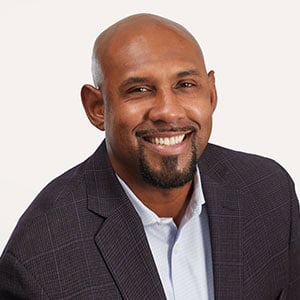
In this episode, Mark Hoeing from CF Private Equity shares valuable insights on governance and leadership within the realm of private equity. He discusses the firm's investment strategies, including buyouts and growth equity, while highlighting their focus on early-stage venture capital in sectors like healthcare technology and AI. As the market transitions post-2021, both larger and smaller institutions are increasingly exploring opportunities in private assets, particularly in small middle market growth sectors and energy.
Hello, everyone. This is George Suttles, executive director of Commonfund Institute. And I'm Amanda Novello, senior policy and research analyst at Commonfund Institute. And this is Espresso Chats, a podcast by Commonfund Institute where we deliver short, strong shots of governance and leadership insight. So far, we've spoken with Tim Yates on the State of Higher Education, with Holly Label and Tyesha Smith about expanding investment manager opportunity sets, and with Joanna Jackson at Weingart Foundation about how foundations can meet the moment. Since Commonfund has a private equity arm and works with our clients to access tailored solutions and alternative asset classes, we wanted to bring in Mark Hoeing, President and CEO of CF Private Equity to the show today. Mark, thanks so much for joining us. Thanks, George. Thanks, Amanda. Great to be with you. Mark, please tell us about Commonfund's private equity program, the investors we partner with on the PE side, and then broadly help us orient us around the state of private equity markets. How would you describe the current market for private equity and and how is it, shifting? I know there's a lot of questions in there, but, you got this. Sure. Yeah. Let's, maybe take them, one at a time. Great great to be with you again. Yeah. Commonfund, you know, really got going in in the, early nineteen seventies. And for the first seventeen years or so, all the private equity activities were done, and and sponsored by Commonfund. In nineteen eighty eight, we set up, CF Private Equity, formerly called, Commonfund Capital as a as a subsidiary, to raise, really to raise third party capital. So since nineteen eighty eight, we've gone beyond just serving common funds clients, but also serving, additional clients. So that that spans endowments, foundations, family foundations, pensions, insurance companies, family offices, and some sovereign capital. So, pretty wide spectrum of investors, that we serve. We we, partner with investment managers across several different strategies, inside private equity on behalf of those clients, and that includes, what are called buyouts, and growth equity. Buyouts are typically investing in, small companies where you're buying out an existing shareholder of a private company, and you're usually bringing in, a pretty detailed plan about what you would do with that business when you enter it. Growth growth equity in contrast, that's typically where you're adding capital to the balance sheet of a company that's growing. You're typically a minority investor in a growth equity investment. And so, you're you're really investing for growth and not necessarily buying out an existing shareholder. You're really you're really helping the business grow as an investor. So those are a couple of examples of who we partner with. We also invest heavily in early stage venture capital. So we have a long history going back many years of investing in venture capital funds. We do it and and we're over indexed toward the earliest stages of company formation. We do it on a global basis. Then that strategy, we're really getting after investment opportunities in things like health care technology, the AI, megatrends, robotics, supply chain, software, development, in those early stage investments. And then we also invest, behind real assets and sustainable managers. And by that, we mean environmental sustainable, strategies. And so we do that in energy, the themes that we're writing or investing behind or seeking out private companies that are thriving, in in subsectors like power generation, energy creation, infrastructure, agricultural development, so food, ag, and water, and then some mining activities as well. And in addition to those sub strategies, we invest in general partnerships, so we back private equity funds, venture capital funds. We also have built capabilities on the direct side of things where we are making direct secondary investments, meaning we're buying out other limited partners' interests, on in through direct secondary transactions. And then we invest directly in companies, typically alongside managers we've been with. So that that covers, really the firm, its history, what we do. The other part of your question was the current market for private equity, kind of where where are we? We're very much, I would say, post twenty twenty one, we were in a period of transition. We were faced with many hurdles, I would say. As we all know, inflation, the impact of inflation on wages, and the cost of securing, supply of raw materials, etcetera. So that inflationary environment has put pressure on companies through the post twenty twenty one period. We we then you know, that included a a a really significant increase in interest rates. We find ourselves today on September seventeenth with a an interest rate cut. So that transition is now moving, hopefully in a direction of of kind of lower interest rates. But for the last three or four years, you know, private companies have been grappling with a higher cost of capital, higher cost of debt. And then really the when I say in transition, it's been that supply chain disruption and impact of things like tariffs that have caused, you know, several headwinds for companies in terms of thinking about how to deploy capital, what kind of risks are they facing. And that has all, you know, really led to, over the last few years, a very slow exit environment. Meaning, it was difficult for private companies to to kind of exit and maximize value, and return capital to their underlying limited partners. So we too have faced a real slowdown in the private markets, over the last several years. I'd say fast forward to today, you know, in the third quarter of twenty twenty five, as I mentioned, interest rates seem to be headed, lower. Operating performance of companies, seems to be, I would say mixed with those higher input costs and higher inflation. That has put pressure on earnings. We have seen some of that ease in the last, several weeks, and I would say the settling in of the view on tariffs and what the impact will be has has made tariffs appear to be much more of a moderate impact rather than a a significant one. I think that story remains to be seen as we look forward over the next six months or so. But as of right now, we would say moderate impact. And so operating performance of companies has seen, a bit of a a a an uplift from some of this change. And then probably most importantly, the, IPO markets, which have been closed for a little over three and a half years, have have now shown signs of opening. And that just started last quarter. So we saw significant IPO activity across companies like Figma, Circle, Karna, all companies that, are quite large. I mean, the big megatrend in private equity, particularly in early stage venture capital, has been the growth of the number of so called unicorns or private companies worth more than billion dollars and seeing those companies grow significantly, but not having any real prospects to exit the IPO markets. Well, that has shifted. So I'd say prospects to exit the IPO markets, well, that has shifted. So I'd say today, we see a more favorable IPO market starting to happen. I would say that has been coupled with a an improved regulatory shift. That regulatory shift has been much more pro IPO, market activity. And so I'd say that's that's really a tailwind, shifted from headwind to tailwind. So I I give you all that in answering your question about, well, where are we with the current market? And I would say we've moved from in transition to, you know, transitioning to something more more positive today. Thanks for, orienting us, Mark. So you you with all that's going on, you mentioned some headwinds, but you also expressed some optimism. So what are some of the conversations that you're having, with clients? What are some of their key concerns and strategic considerations, and how are you helping clients, grapple with some of those? Sure. Yeah. So we have a variety of clients which have a wide range of experience, particularly in private markets. Many of our clients have had significant exposure to private assets for a very long time. And for that cohort or group of clients, you know, they've seen a slower exit pace. They've been a little bit more cautious about new commitments. They've seen the public markets perform very strongly over the last three years. I'd say to almost everyone's surprise, the last three years across the public markets have been very strong as measured by, say, the S and P five hundred. I think behind the veil of that success is a little bit of, trepidation around the concentrated nature of, so called Mag seven companies and the kinda narrow market that that the public markets have presented. That said, those experiences that I mentioned, you know, slower exits, cautious about new commitments, and strong public markets, you know, has called into question out of the one and three year return profile that comes from your portfolio in privates versus publics. Right? Maybe just a footnote or a step back, the reason you invest in private assets is to find not just a diversified set of companies, but a set of companies that you believe can perform, in an illiquid structure, and and get you an ill illiquidity premium over the public markets. Right? So, not having seen a lot of that for the last three years has caused concern among some of those existing investors who have significant exposure. That said, many of those types of clients have upwards of thirty, forty, fifty percent, ill illiquid exposures, which is driven by their investment policy and their view on how to how to generate long strong long term performance. I'd say at the other end of the spectrum, if you are a newer investor to the asset class because you're a new foundation that gets set up or you're, a family office that typically may not have had a lot of private assets, it's a terrific time to be entering the asset class. To put that in perspective, you know, if we step back, post twenty twenty one, you really saw a significant washout and and a really destruction of value in some of the private market segments. Not all of them, but but some of them. I would highlight maybe two. One is, the pre IPO private market segment. That really got, hit hard in twenty twenty post twenty twenty one with the correction in the public stock markets and then really just a freezing up of appetite for companies that aren't generating significant amounts of cash, but rather consuming cash. So that segment got hit really hard. And I would say a lot of capital has been washed out of the pre IPO, private segment, which is probably a good thing, because it has reset, the entry point and the, position among, providers of capital around valuation for companies like that. So that's probably a good thing. I'd say the other part of the market that got hit really hard was large, buyouts or mega cap buyouts where you need significant amount of leverage. If you think about it, if you if you made those investments and call it twenty eighteen, twenty nineteen, twenty twenty, twenty twenty one, and then interest rates go up, so dramatically as they did post twenty twenty one, you know, that cost of capital increase has really, took a hit to enterprise value of the companies in a in a different, interest rate regime. So so all that's to say that if you're a new investor to the asset class, you're able to enter today at arguably a better entry point, than what we now know was a bit of a bubble in twenty twenty one. So, you know, your question, how is how are these trends affecting our clients? It's a little bit different by client type. And, you know, that that that's some of the perspective that we're seeing. Thanks, Mark. I wanna quickly address some headlines and data and get your thoughts. So I'm sure listeners have seen that some large higher education institutions like Harvard and Yale have announced big sell offs of private assets likely to address liquidity needs amid funding cuts and other pressures. But on the other hand, there's evidence of planned increases to private asset portfolios. So for one example, in our recently released foundation bench benchmarking study, we found that foundations in each size and type cohort responded that private equity is the most likely asset class to see increased allocations over the next three years. So is that just because there's favorable buying opportunities, or do you have thoughts on how different size or type of institutions are experiencing this market? Yeah. Abs absolutely. Yeah. You you're right. There's, historically been, a correlation around size, meaning the larger the institution, probably the more willingness they have been to invest in private assets. I think a lot of that has shifted, in recent years where, even smaller institutions have been trying to increase their exposure to illiquid assets. Right? They've seen shrinking number of public companies, growing number of private companies, in contrast, number one. Number two, I think private equity and the model has proven to be, quite resilient through the cycles. And so I I think from a risk standpoint, twenty years ago, private equity, particularly buyouts, growth equity, early stage venture. They were viewed to be much more risky asset classes. And now in the fullness of time, the model has has held up very well. And in fact, it's it's really, the governance structure of private equity that's proven, to be, you know, part of the reason why the asset class has been resilient. So I would I would sum up kind of an answer to your question, or the point you're making and say, yes. We've observed those trends. That has been shifting. I think it really does come down to the, individual investor and what their, tolerance for illiquidity, is or or is not, and what is their duration? And to the extent that the longer the duration you have, the more willingness you probably have to take illiquidity risk and invest in the asset class. And as more and more opportunity has emerged, you know, I think more investors are are participating. Awesome. Thanks, Mark. So we always like to end the show on a high note, so I wanna sort of lob this question, to you. What are some areas of the market that are particularly exciting or compelling right now? You've alluded to some, but wanted to give you the opportunity just what's really getting you going in terms of opportunities? Yeah. Look. There's, the things that we're very excited about that we see through the kind of the noise and the short term, cyclicality. Number one, you know, finding those entrepreneurs or families that are looking to grow their businesses, but, also, you know, they're sensing the risk profile, and they may wanna sell position in their companies to diversify their assets. So we love that small middle market, growth, sector. That tends not to be a highly levered sector. It's, more of an equity and a return story rather than a use of debt story. I I do think, reliance upon debt, you know, has been something we've always tried to minimize in our return profiles. We we think the market will give us debt, and it'll take it away, and that's exactly what's happened. So it it pushes us toward more equity, opportunities. That that does include early stage venture capital, as I mentioned, and finding those, winning companies that ultimately make their way through the cycle. It turns out in early stage venture capital, we look at the data. It's a very small subset of the companies that make it, and there is a high correlation between a small number of managers who actually back those businesses. And if you think about it, if you and I are an entrepreneur and we start a company tomorrow, we have the greatest idea in the world, we're probably gonna go to the most successful venture capitalists in the world first to talk to them about backing us. So we we do think there's a an over indexing among a certain small subset of venture managers who get access to the best looking ideas in companies and typically see them first. And then I'd say in energy, we're spending a lot of time looking at precious metals, investing in that area. We do see a fundamental mismatch between power demand and power supply. Whenever you see that, we're backing, managers in the power sec sector who are facilitating providing power. And then, I guess, finally, I'd say, one thing we've learned over time is that our managers can help point us in the direction of certain sectors, segments that are really attractive. And then once we're pointed in that direction, we actually have capital behind those managers. We are then proactive about trying to get an incremental investment into companies alongside those managers. That's called a co investment. And, we're now, up and over a hundred and sixty, co investments in our portfolio where we've we've seen really attractive opportunities. And so we expect all those areas, to continue to be attractive and compelling in the near future. Awesome. Thanks, Mark. We're on the other side of the cycle. Opportunities abound. I just, really appreciate you. Mark, thanks so much for coming on the show. Really appreciate it. If you like this conversation and you wanna hear more from leaders in this field, visit www.Commonfund.org/espressochats to view the full playlist and subscribe on your preferred podcast platform. See you next episode. Bye, everyone.
View the full playlist and subscription options for this podcast here.