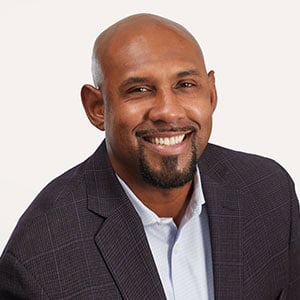
Join hosts George Suttles, Executive Director, and Amanda Novello, Sr. Policy and Research Analyst, in the inaugural episode of "Espresso Chats," a series by the Commonfund Institute serving up strong, short shots of governance and leadership insight.
This episode delves into the current challenges facing higher education, featuring insights from Tim Yates, President and CEO of Commonfund OCIO, on the impact of policy changes on institutional investors. Discover the implications of federal funding cuts, proposed endowment tax changes, and the importance of maintaining a long-term strategic focus amidst short-term challenges. Tune in for a thought-provoking discussion on governance and leadership in the evolving landscape of higher education.
Welcome, everyone. This is Espresso Chats, a podcast by Commonfund Institute where we deliver short, strong shots of governance and leadership insight. For our inaugural episode, we wanna briefly introduce ourselves and what we're bringing to the podcast. I'm George Suttles, executive director of the Commonfund Institute, and Commonfund has been providing governance and leadership insights for fifty plus years. Commonfund Institute is the education and research arm of Commonfund. Commonfund is an asset management firm in the endowment space founded in nineteen seventy one with a seed grant from the Ford Foundation. Our firm manages customized investment programs for endowments, foundations, and other mission driven institutions. So now you can see why we are considered a trusted source, for investment governance best practices across across the country and across the globe, to be honest with you. We spend time on the road with constituents and are hearing the chatter about what matters most to institutional investors. And now, obviously, it's twenty twenty five, so we need a podcast. Hey, everyone. I'm Amanda Novello, senior policy and research analyst at Common Fund Institute, and I'm excited to cohost some great guests and help listeners make sense of what's going on and how your institution can navigate everything. Almost equally, I'm excited to drink espresso and chat and maybe even sprinkle in some puns, but that might be a tall order. How do you know that? Amanda. That was good. I like that. I like that a lot. Thanks, Amanda. Joining us for our first episode of Espresso Chats is Tim Yates, president and CEO of Common Fund OCIO. We are absolutely thrilled. Tim agreed to join us, especially given how busy he's been helping clients navigate a challenging terrain facing the nonprofit sector in the US. Tim, welcome. Thanks, George, and thank you, Amanda. It's a great honor, and privilege to partner with you all. As always, and especially for the first inaugural espresso chat, podcast. Although I didn't get, I didn't get my cup of coffee or shot of espresso, in my office location. Well, we'll we'll get you a gift card after after the, after the show. Thanks thanks, Tim. Tim, let's, jump right in. There's been wide a wide reaching attack, on education in the US this year. The Department of Education is arguably being dismantled. Major grant funding has been paused or pulled entirely, and high profile institutions like Harvard and Columbia seem to be test cases for broader political actions, not to mention the endowment tax, which we'll spend a little bit of time, talking about. So question for you. How are you making sense of this moment? And for the listeners, should institutions, take a wait and see approach, or is there something they should be facing head on? How how are how are how should we be thinking about tackling these issues, especially in higher ed? Well, thanks, George. It is it is certainly without question, an interesting, time for higher ed, and there's been a lot thrown at us, in the last several months. But before I try to make sense of, of this moment, let me start with a couple of, of important caveats. The first is, as you discussed, in your opening, Common Fund is an investment manager. We're charged with managing endowment portfolios that will hopefully generate returns, over the long term that support the missions, of our nonprofit investors. And I say that only because as an investment manager, we try to leave, all of our political views at home and make investment decisions really based on economic conditions, on capital market conditions, on risk return opportunities, and so on. And so while the the political environment no doubt influences these things, Common Fund as an institution, tries to stay out of the broader political, discourse. We leave a lot of that work to partners, like Nikubo, and others. So that's that's caveat number one. Caveat number two, would be, that while Harvard has certainly captured, the attention of the current administration, and perhaps, you know, as a result, all of our attention, it's it's only one institution. It's definitely the oldest founded in sixteen thirty six, so almost a hundred and forty years before the country was founded. And it's definitely the wealthiest with an endowment in excess of fifty, fifty billion. But, again, it's it's only one institution. There are six thousand colleges and universities in the US, and those institutions, both private like Harvard and public, serve more than nineteen million students. And so I don't I don't raise this to minimize what's going on at Harvard. I think what's going on at Harvard is profoundly important to higher ed, and I would argue to our country and society as well. But I wanna make sure that we keep in mind that there are five thousand nine hundred ninety nine other institutions, of higher ed, and we shouldn't paint this picture, with just one brush or or in one color, I guess, George, in this case, crimson, if you will. And as you always say, you know, if you know and understand one nonprofit, one college, or one university, you know and understand exactly, you know, one college, or one university. And let let me give you an example of why I raised this. We manage as an OCIO, so as an outsourced chief investment officer, over ten billion dollars of endowment funds on behalf of fifty nine higher education, institutions. These institutions range from community colleges in Texas and California to foundations, that support state universities on in Montana and Florida to private colleges in New England. And just this past weekend, I had the great privilege of attending a board retreat for one of the support foundations we work with in Georgia. So this is a foundation that fundraises in support of a large state university system. That system educates over forty five thousand students. And this retreat was all about the success of this foundation and and the university and the success that they've had. They've raised over fifty million dollars in the last five years, largely in support of financial aid and nearly doubled the size of their endowment. Enrollment was up six percent last year and has increased for six consecutive years. So I share this example so simply to to really illustrate that while Harvard certainly feels under attack, at the moment, there are literally thousands of experiences that may not look like what's happening, at Harvard. And so with all those caveats, I guess I'm I'm finally getting around to to, you know, sort of actually answering your question, which was, you know, how are you making sense of this moment? And I would say it's it's really hard to make sense of it all. The two big news items currently, the freezes and cuts in federal funding, or grants for research and the proposed increase in the endowment tax, both of which will impact Harvard as well as some other large research and, universities. They those those two things, while sort of in the news all the time, don't have a huge impact on the fifty nine colleges, and universities that we work with. They don't receive hundreds of millions of dollars in research grants, and most are below, the currently proposed threshold for the endowment tax. So don't don't get me wrong. I I know we're gonna discuss the the endowment tax in a minute, but I do think, you know, these things are profoundly consequential to the institutions that are impacted by them. It's just not impacting, our clients, at the moment. What I what I am focused on, though, which I which I do think will be far more consequential to the majority of the higher ed institutions we work with and and likely the thousands of colleges and universities beyond the Ivy League are three things. One, what's happening with regard to international students, two, the proposed concept of risk sharing where, you know, colleges and universities would be on the financial hook for federally issued, student loans, and three, the proposed or potential changes to Pell grants and and other student funding. And all of this is happening against a backdrop that was already challenged, by a structural decline in the demographic picture and a looming, you know, the the, proverbial, demographic cliff. And so I'm I'm happy to chat about all of these, George, but I I also recognize that you branded this as a as an espresso shot, and not a full, you know, cup of coffee. So I I fear that I'm already pushing the limits. So I'll I'll pause there. No. But, Tim, I appreciate that because it really is about, you know, sort of us understanding the nuances, the the multidimensional context in which we're trying to navigate and and and do this work. And then what I really like is that you lifted up a win. Right? That there are colleges and universities, although they're monitoring what's happening in the public policy landscape at the federal level very closely, there are still wins to be had. There are still, strategic opportunities in higher ed, to be taken advantage of. So I I really appreciate that. Exactly. There's a there's a lot of good stories out there. Yeah. No. I think that's absolutely right. Amanda, I wanna turn to you because, Tim mentioned a couple of things that really resonated, and I wanna make sure that we touch on them. What do we know or understand, so far as it pertains to the house of representatives legislation and the implications for institutional investors. Because as Tim mentioned, we're not political, but we do need to track that closely because it does impact our clients. So In terms of endowment specifically, the house of representatives has passed a bill if passed in the senate and then signed by the president would dramatically increase the scope of the current endowment tax on private higher education institutions. The current tax implemented in the twenty seventeen tax cuts and jobs act during the first Trump administration is one point four percent on net investment income at private institutions with at least five hundred students and assets of more than five hundred thousand per student. Now the new tiered structure that's currently up for review in the senate, and there might be breaking news by the time we release this podcast, and we'll we'll get there. You know, we'll we'll be on top of the details and disseminating that information as it comes. But what's being reviewed now would start at one point four percent the current level, and that rate would step up for institutions with more and more endowment dollars per student and top out at twenty one percent of net net investment income for endowments with more than two million per student, which would essentially match the corporate tax rate on those small handful of institutions with the largest endowments. So as Tim mentioned, this applies to a small subset of schools. Estimates suggest the new tax rates would apply to around forty five to fifty institutions. There's a similar tax rate structure, that would apply to private foundations under this law, and we've outlined these details and more in a recent post on common fund dot org that you can find on our site. Thanks so much, Amanda. So, Tim, Amanda shared a lot there. There's a lot to unpack. But, fundamentally, how are you and the investment teams at Commonfund, helping clients even scenario plan around implications for, this new tax regime. Right? So even if it's not going to have a have an impact or, you know, it's only gonna impact a small subset in higher ed, I know clients must say, well, let's do a little bit of scenario planning. Let's, you know, think about what the implications are if this if this tax regime were to expand and and and and and impact more colleges. So I know you're helping folks think a think a lot about that. So just, unpack a little bit of that for us in terms of what Amanda shared. Yeah. Absolutely. And a a lot of questions there. I'll I'll try to be succinct, but I would I I missed this in the prep, session, but I just one small nuance is that the current tax law from twenty seventeen, you know, applied to five hundred thousand, assets per student and institutions that enroll at least five hundred tuition paying students. And because there's a couple of institutions that have very large endowments that where no one pays tuition, and so they're exempt, under the current law. But, you know, you asked sort of what what the impact, would be. As currently drafted, you know, there wouldn't be any impact on most colleges and universities. I think you referenced forty five fifty, fifty five. You know, last year, there was something like fifty six that were subject and paid the tax, last year, and that's because their endowments, were in excess of five hundred thousand, per student threshold. So assuming that that threshold remains, and that wasn't, you know, always the case. There was some threat, a couple of months ago that that would be lowered, but the current, legislation has it remaining at five hundred thousand. And there are some nuances with regard to that, including the exclusion now of international students in the calculation, as well as exemptions for religious institutions. So assuming all of that, roughly the same number of institutions would likely pay the tax, next year's, which means that the bulk of college and universities would not be, subject to it. What is materially different though, Amanda, which you raised, is the rate. And so five institutions would be in that twenty one percent tax bucket, Harvard, Princeton, Yale, MIT, and Stanford. Now it doesn't take a hedge fund quant, and we have those, George put, you know, to calculate even simple guys like you and I can calculate the impact that if you paid one point four percent on net investment income last year and you're going to instead pay twenty one percent next year, it's pretty material. So let's say Harvard paid forty five million dollars, last year when the rate was one point four percent. That tax is now gonna be fifteen times higher. So instead of forty five million, it's six hundred and seventy five million. That's six hundred and thirty million that's not going to financial aid, not supporting students, not supporting the operators, operations of the university. Grinnell College is a great example of this impact opposite end of the spectrum, from Harvard. It's a small college, in the Midwest. It's in Iowa. Small college with a big endowment. Two point seven billion dollar endowment that equates to roughly one point five million per student, and that would put them in the fourteen percent tax category having been in the one point four percent, up until now. That endowment, which has been built by the generosity of their donors over decades as well as undoubtedly savvy investment, and stewardship, over the assets supports sixty percent, six zero percent of their operating budget. Ninety percent of their seventeen hundred students receive financial aid, and the college meets a hundred percent of student need with no loans because of this great resource called their endowment. So so so this college, Grinnell, paid two point four million in taxes last year, and the potential cost under this new legislation would be in the thirty million dollar range. That's on a total operating budget of a hundred and ninety million dollars. So anyone who's listening, to this, who works with or even understands the finances of a small private college, you know that a thirty million dollar hole in a hundred and ninety million dollar operating budget is absolutely massive. And, you know, for some institutions, it could be, existential in nature. So your second question is how would or will some of these institutions think about investing their endowments, if these increases in the tax rate actually come to pass or come to fruition? And and I think a lot of that still remains to be seen. We need to keep in mind that the tax is not on the endowment value. It's on or assessed on the net investment income, which includes things like dividends and interest, but also realized gains. So they will all, you know, absolutely have to start thinking about how to manage those things in a tax efficient manner, how to manage realized gains, how to think about tax efficiency from an investment perspective. But from a bigger, picture perspective, I think the larger question is whether you target a higher level of return to offset the tax or you reduce the payout or support to the university and, by extension, the students because some amount of spending is being siphoned off by the federal government. And I think that's a big but not easy question from a governance standpoint, to wrestle with. And, and again, I'm happy to get into more of that, and and what that might mean. Certainly, a higher return objective would require taking more risk likely in the form of equity or and or illiquidity. But, again, we're drinking shots of espresso here and not the whole pot of coffee. So let let me pause and, and leave it there, George. I wanna close this out here and just give you space to share some final thoughts with us. And let's, let's lean into let's lean into to to hope and strategy a little bit. What what opportunities are you seeing for institutional investors as we all sort of navigate this together? Yeah. I would I would say, George, in a minute, it's it's really easy, to get wrapped up in the daily news flow. And and, you know, it's what's happening is really important. I don't wanna minimize it. I don't wanna suggest that what's going on isn't important, because it is. But, you know, we should all be mindful, and ensure that it doesn't crowd out the time and intention and focus, that we need to have on long sorry, on long term, strategy and a long term thinking. Someone at the table has to still be thinking about what success looks like in twenty years and how that success, will be achieved. And so, you know, I think in this world of, of tweets or whatever they're called now, you know, short termism is prevalent, but it's it's not great for perpetual institutions of higher education, and it's definitely not great for the investment strategy, of the perpetual pools of endowed assets that support, those institutions. So I think making sure, that we're at least balancing, the sort of the the news flow of today and the impact of all of that, with the long term development of a strategy that will ensure success for generations, to come. Awesome. I I I think that's a good good place for us to close perspective, balance, and long term institutional investors need to stay strategically focused on the long term. Tim Yates, my friend, thanks so much for joining us for the first Expresso Chats podcast. We really appreciate it. Tim, you were brilliant. Amanda, you were a delight. And as for me, I just tried not to embarrass us. So hopefully hopefully, everybody stayed in their lane. Thank you, Jordan. Thanks so much. Thanks, Amanda. If you like this conversation and wanna hear more from leaders in the field, please visit www.commonfund.org/espressochats to subscribe on your preferred podcast platform. Again, gratitude to our guest, Tim, for joining us. Amanda, thank you for co hosting. I think we had a great time. We'll see you next episode. Bye, everyone.
View the full playlist and subscription options for this podcast here.