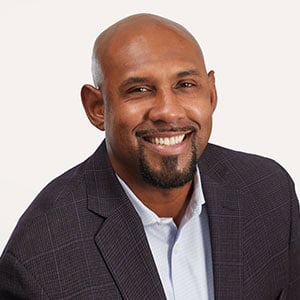
Join hosts George Suttles, Executive Director, and Amanda Novello, Associate Director, in this episode of Espresso Chats, a series by the Commonfund Institute serving up strong, short shots of governance and leadership insight.
In this episode of Espresso Chats, Commonfund Institute sits down with Georges Dyer, Co-Founder and Executive Director of the Intentional Endowments Network (IEN), to unpack how endowments, foundations, and other institutional investors are approaching AI adoption. Georges shares key takeaways from IEN's member conversations — from balancing AI's investment opportunities against reputational, environmental, and social risks, to why "we're not investing in this" is rarely a realistic option anymore. The conversation covers IEN's new AI investing and responsible investing guide, why good governance is the throughline for navigating fast-moving AI risk, and why systems-level investing may be the only comprehensive lens for thinking about AI's impact on climate, jobs, and the broader economy. Georges also points listeners to a handful of resources shaping the responsible AI investing conversation, including the Investor AI Resource Hub, the World Economic Forum's AI playbook, and reports from ILPA, Reframe Ventures, and Majority Action.
Hello everyone, this is George Suttles, Executive Director of Commonfund Institute. And I'm Amanda Novello, Associate Director at Commonfund Institute. And this is Espresso Chats, a podcast by Commonfund Institute where we deliver short, strong shots of governance and leadership insight. Our AI themed series continues, and today we are thrilled to be joined by a friend and partner of the institute, Georges Dyer, Executive Director at Intentional Endowments Network. Thanks so much, Georges, for joining us. Thanks for having me. It's great to see you both. Awesome. Let's jump right in. Before we get into the AI related stuff, can you tell us about IEN, your role there, and we're especially interested in your podcast. Of course. So the intentional endowments network, we're a nonprofit peer learning network. I'm the executive director and co founder. We started it about twelve years ago now. And we've got about two hundred members, and that's a mix of asset owners mostly endowments and foundations but other types of asset owners as well in addition to investment consultants, OCIO's, managers across asset classes that work with these asset owners and all focused around peer learning and education on sustainable impact mission aligned investing. So we cover a range of topics, but a lot of the works around climate and inequality broadly. And we've been doing a lot more work around responsible AI over the last eighteen months or so. And the podcast we started about a year and a half ago, it's called the future of finance with Georges Dyer. And, you know, we just draw from our members and other kind of leading thinkers and people doing interesting things in the sustainability and sustainable investing space. And it's been a lot of fun to to have those conversations. Awesome. Thanks, Georges. And you know, here at the institute, we're huge fans of peer peer learning, and we're happy to be a member of IEN. You mentioned that you've hosted several conversations on AI, responsible AI, and especially responsible governance. What are a few key takeaways from those conversations and what's top of mind for members, investors, and other folks who are thinking about AI adoption, just across the spectrum of institutional investing? Yeah. It's been really interesting. I mean, I think top of mind is just how do we learn about what's going on, all the risks and opportunities. I think, you know, certainly everybody wants to participate in the AI boom and all the investment opportunities there, but also be mindful of the risks both both from, you know, direct financial impacts, but also, you know, reputational. You know, in some cases, a lot of questions around what does this mean for our investment approach when it comes to, you know, if they have commitments around social or environmental investing. A lot of our members in the higher ed space. And so obviously a lot of concerns and debates going on there about how to use AI in the educational context and will it undermine the mission of higher education. And so what does that mean from an investment perspective for the endowment? So looking at some of those types of mission aligned, issues and you know, a lot of conversations around the systemic risks, you know, that everybody's kind of talking about will AI destroy jobs? What does that mean for economic performance overall? How's that going to impact the rest of the portfolio? And, you know, I think for asset owners in the in the network, it's a lot about like, what questions should I be asking my consultants and managers like where, where should we be taking action on this? Like, where do we start? And what kind of policy should we be putting in place? I think, like kind of at multiple levels in terms of how we use AI ourselves, like within the investment office, how our managers use AI, and you know, how they use data and what are the implications for for the asset owners on that, and then how the companies that they're investing in, are either using AI or developing AI and what kind of like guardrails, could or should be in place around responsibility when it comes to social and environmental impact. Georges, just a quick follow-up question because you did you and and push back if you think I'm mischaracterizing this, right? It feels like there's an opportunities or risk tension that these institutions are trying to hold. Can you lift up and you alluded to a you alluded to this a bit. Can you lift up maybe a a a stark case study that one of your members has lifted up to you where there's advantages to considering AI investments in the portfolio, for example, but then also there may be operational risks or something of that nature? I'm just looking for something, a meaty case study, if you will, that folks can kind of wrap their arms around. Yeah, I mean, one that jumps to mind, we did a series of interviews and one of our members, you know, kind of just said bluntly, it's a, you know, large endowment that said, no way we're not investing in this stuff like our investment team is seeing the opportunities and, you know, as the ESG or sustainability person, I'm not going to stop that. But it does bring up a lot of questions around what it means for our climate commitments or commitments around ESG. I would think about water and climate from the data center perspective and then all those big social issues that, you know, some of which I mentioned the jobs piece, but also surveillance, privacy threats to democracy. So I think there's a lot of tension there. But I think it was, you know, in that case study anyways, it's very much like we're taking advantage of this opportunity. So it's how do I try to put guardrails on this and make the case that we need to, you know, slow down and be be thoughtful about it. And then I think there's also also the piece or concern increasingly around, you know, is this a bubble just from a pure kind of investment perspective, which is starting to come into the conversation too, as as all this evolves and changes so quickly. Yeah, I guess I want to follow-up on that, just tapping more into your perspective and insight as a leader of a membership organization. Like, is there anything you're consistently hearing from your members around like what they're doing or how to operationalize these kind of big macro questions that you just mentioned around, you know, ESG and mission alignment? Like, what are you hearing about how people are actually grappling with these questions and operationalizing them whether in their investment state policy statements or, just, you know, conversations with the board or anything like that? Yeah. I mean, it's funny as we get things changing so quickly. Like, we did a series of interviews I mentioned a few months ago, you know, kind of nine to six months ago. And at that time, were hearing a lot of we're, we're still figuring this out. We're having the conversations actively, but we're not, we haven't really codified it yet in terms of a policy or framework. I think that's probably changed in the last few months. We've definitely seen some examples or heard of some examples of people, you know, establishing those policies. Know, just saw rail pen that for example pension out of the UK just put out a piece around their approach to AI governance. So we're starting to see some of that kind of come out, from that perspective as well. But yeah, you know, think for the most part, we're hearing like it's early days to figure this out. We're having conversations with our consultants and managers, but we're asking questions, but they're not like structured systematic questions necessarily. And, you know, hearing things like we'd love to have a framework about how to approach this, because there are so many issues related to it. It can get overwhelming. We'd love to see like due diligence questionnaires that we could use when we're engaging with managers or have our consultants use. So those are some of the types of things that we're kind of hearing requests for. And we're again, to see some of those come out into the space as well. So it sounds like you have been getting requests, but you've also been putting out a lot of resources. I know IEN put out a great AI investing and responsible investing guide. So just wanna give you the floor to talk a bit about that resource, what people might find there, and also, is there anything you would add? As you mentioned, things are evolving so rapidly. Is there anything you would add or, like, double click on based on what you've learned in the past few months? Yeah. The piece was really designed to be something brief and digestible because there is so much out there like we didn't want to put another long piece out there, but so it really kind of refers to a lot of great resources and tries to curate some of those to make it easy for boards or investment teams to sort of quickly get up to speed on, what types of tools are out there. And the structure of is it the structure of the pieces to look at both the opportunities and the risks, we kind of upfront acknowledge the opportunities because I think sometimes these conversations can get too into the doom and gloom about risks around AI. So we kind of careful to recognize that upfront, but a lot of the content does look at those risks because they are there are many and they're complex. But really the big highlight is the focus on good governance. Think, you know, as you mentioned, this is all changing so quickly. So really, seems like and that's what we've heard. And a lot of the resources that we reviewed seem to come back to consistently is, you know, this will keep changing, but the companies that have good governance should be able to continue to adapt and and act responsibly. So I think that's sort of a big north star. The piece talks about a little bit about how to engage with your consultant managers, as I mentioned, on these, you know, issues around responsible AI. And looks at not just specific kind of company risk or portfolio level risk, but also the systemic risks and kind of what this how to take a system level approach, to thinking about AI really means for, you know, long term, universal asset owners. And I think, you know, as I mentioned, we refer to a lot of other reports and groups. And so just to mention a few of those, because they are updating a lot of these things as they do change for so quickly, the top one that's really being developed, that I would point to is the investor AI resource hub. And that's just at investor ai resource hub dot org, still being developed. But the idea there is that that will be a place where like a lot of resources are continually updated, and just as a public service to the field. So that's a group that that we've worked with and on all this, but a few of the others, you know, the World Economic Forum put out a responsible AI playbook for investors, DOPA, the institutional limited partners association that put out an asset owner guide. Reframe ventures is another group that we've been working with, that's putting out a lot of great resources kind of focus on venture on the venture asset class. Majority action put out a great report on system level impact for AI. And then just a few of the other groups that you know, this is as a network where we're always pulling in expertise from other groups. Tech forward is a great group that works with public companies, Project Liberty, Omidyar Network, Mozilla Foundation, OpenMic. I'm sure you've had some of these or will have some of these folks on the on the podcast as part of this series. But, yeah, those are just a sampling of some of the good resources out there and groups that are really kind of focused full time on these issues. Thank you. That's super helpful. And, in case anyone's not taking notes, we will try and copy paste some of those, resources into the show notes. I also want to ask a follow-up question, just for our listeners who aren't super familiar with systems level investing. I know IAN has done a lot of work in this area. Is there anything you could just like at a super high level describe what that is, what that means, and, how AI kind of plays into that perspective? Absolutely. It's I'll try to articulate it concisely, but it's looking at systemic risks that really impact the whole market or the whole economy and things that you can't necessarily diversify around as an investor. And so issues like climate change or extreme inequality that might impact, you know, the beta, the whole market and and have a big impact on returns over time that you can't just buy or sell stocks to avoid those types of systemic risks. And so system of investing is looking at those and trying to find other ways to either engage with companies or maybe even engage on policy, or or look at opportunities to invest in solutions. And I think a lot of those themes apply nicely to the whole responsible AI conversation where it's, you know, I think there is opportunity for investors to have a voice on policy and regulation as this new technology comes to bear. And I think there are opportunities to invest in sort of quote unquote AI for good or some of the safety and solution companies that are going to help make AI work in society and avoid some of these big risks and issues. And again, engage with companies, whether it's the big tech firms or startups, you know, in your sort of venture allocation to really advocate for responsible AI guardrails and policies, to help establish some some healthy norms, I guess, in this new sector. George, you know what's really, yeah, thanks for that overview. You know what's really, really interesting, you know, and you and I have had many conversations about systems level investing as a framework, as an approach, that is seemingly the most comprehensive way to think about investing, but really AI is this really intriguing opportunity because it's unavoidable. There's really no other way to think about investing in AI except through a systems level lens because you necessarily pull a divestment lever because cuts it's everywhere, right? And you can't necessarily have an asset class focus without thinking about how it's impacting the entire system, you know, climate, jobs, etc, etc, etc. Those are real risks that need to be articulated and managed, so when I think about systems level investing as it pertains to AI, it kind of feels like that's really the only way to truly begin to wrap your arms around this in a comprehensive way in portfolio. Does that, do you get that sense or am I missing something? I would totally agree. Like you said, it's one of these things that's going be embedded across anything. Again, like an analogy to climate, which is going to impact everything, some sectors more than others maybe, but nothing's going to be sort of left untouched. I think the same is true with AI. It's really interesting. I think system level investing is informed by systems thinking and these complex systems, whether they're social or environmental, or, you know, financial systems, whatever types of systems. And I think, again, just to put a bright spot on the positive, I think AI gives a huge opportunity for us to better understand complex systems and better, enable systems thinking in the investment process and addressing other solutions, whether it's, you know, smart grids or better climate science or just, you know, drug development, all the things that kind of promise of AI that are out there. So, you know, I think not only is it a inherent system level challenge, but I think hopefully the tools themselves can help us better address the systemic risks. Absolutely, and you mentioned something, you know, the AI evolution and the AI adoption and all of the tech around it is moving at a breakneck pace and so how is IEN continuing to think about sort of holding space for this learning community given that pace and where can people learn more or tap into IN if they aren't members, but they want to become members and they really want support from the network to understand how to continue to think about responsible AI adoption? Yeah, it's a great question. And you know, as a membership network, we're always drawn from our members for expertise because again, everybody's wrestling with this. So we're trying to provide venues where people can share what they're learning best practices, bringing in those expert groups, a bunch of which I mentioned. We'll continue to have these conversations on the future of finance podcast. So that's good way to tap in and sort of get a sense. Put out episodes every week. So we got plenty of good stuff out there and, we've got a great one coming with from one mister George Suttles that'll be released soon that I'm very excited about. But we also looking at, you know, sort of scope of work around responsible AI. This year, we're planning to kinda lean into, convening and pulling together the consultants and OCIOs that are inevitably needing to wrestle with these issues for their own clients and looking at that as sort of a hub of expertise. So that's one track that we'll be taking that I think will come out with a lot of good insights. And then we've got our annual conference coming up at the University of Toronto in November, where we'll definitely be leaning into some of these topics and have some of those expert groups there and some asset owners and managers talking about what they're doing on these topics. Yeah, plenty of chances to kind of tap in and a lot of this information is on our website intentionalendowments dot org, a lot of it's publicly available and there's information about membership there and how to get more involved as well. Awesome, thanks George, and so we're coming to time, so I want to give you an opportunity to end this episode with some hope. What are you hopeful for as it pertains to this work and how people are thinking about it? Yeah, I think, you know, it's why as you mentioned, it's one of these things that's going to touch everything in our lives and everybody is increasingly aware of that. And I think all of this work comes back to people, you know, whether it's investment committee members, trustees, investment teams, the people that work at the consultant, investment consultant firms or management firms. And I think everybody recognizes we want this technology to serve people at the end of the day. And it just definitely seems like there's a growing awakening around that. So, yeah, I think that's what gives me hope is that just there's a lot of smart, thoughtful people that want to help drive economic value and investment performance, but also, you know, ensure that we've got healthy social environmental systems that we all need. And I think a new amazing technology like AI brings that kind of front and center for everybody. And, yeah, it's great to see kind of a growing, focus on that. And you know, I think with any technology, they're scary changes and big changes that happen. But, it feels like we're starting to turn a corner to really look at how we can put some guardrails on these technologies to make sure that they can solve all these big problems that they promised, but, minimize the new problems that they might create. Absolutely. Yeah, because it's one of those things where, you know, when intelligent groups of people commit to moving thoughtfully, then we see sort of what intentionality can bring to bear. See what I did there? Intentionality? Intentional Endowments Network. George, thank you so much for coming on the show. We really appreciate it. Thank you for your partnership, your friendship, and your leadership in this space. Thank you, thank you, thank you. Well, likewise, George, Amanda, it's been a pleasure and so appreciative of all the work that you are doing and your participation in IN through Common Fund, so thanks and hope we get to talk again soon. Thank you. For you all out there, if you like this conversation and want to hear more from leaders in this field, visit w w w dot commonfund dot org slash espressochats to view the full playlist and subscribe on your preferred podcast platform. See you next episode. Bye.
View the full playlist and subscription options for this podcast here.
Show notes:
- IEN Resources - Responsible AI Resource Library - Intentional Endowments Network