Episode 11
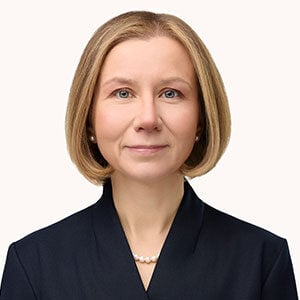
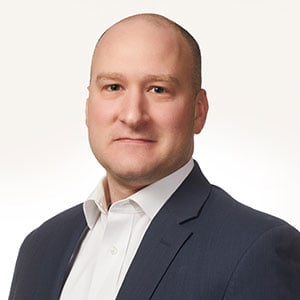
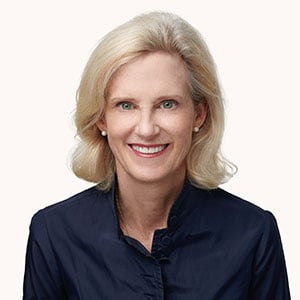
In this episode of Commonfund Point of View, Julia Mord, Chief Investment Officer, is joined by Brian Cohen, Managing Director, and Caroline Greer, Managing Director, to unpack what it takes to build a mission-aligned investment portfolio.
They discuss how mission-aligned conversations typically start, how to assess a portfolio's current alignment, and why a clear "theory of change" keeps strategy consistent as committees change over time. The conversation also covers the range of strategies involved — from fixed income and private credit to venture capital and real estate — and place-based investing, where capital is directed into the specific communities clients serve.
Tune in for a practical, fifteen-minute look at how endowments and foundations are putting mission and capital to work together.
Hi. Welcome to Commonfund Point of View. I'm Julia Mord, Chief Investment Officer of Commonfund OCIO. In today's podcast, we will look to give you our best views on capital markets and investing in fifteen minutes or less. I'm joined today by my colleague, Caroline Greer, an investment specialist who leads mission aligned investment research across multiple asset classes, and Brian Cohen, a client specialist who works directly with OCIO clients on mission aligned mandates. Brian, let's start with you. When a client first raises the idea of mission aligned investing, what does that conversation actually sound like? Yeah. So I I think that's a great place to start, and the conversations that I've been involved with actually all sound different. Usually, it is started with enthusiasm. The client wants to deploy more capital towards their mission past just what they're able to grant. Sometimes it comes with an opportunity where they've been approached by either a local CDFI or another nonprofit with an investment opportunity. And so they wanna learn more about how that could fit into their endowment portfolio and what role Commonfund would play, throughout their journey with mission aligned investing. Is there a typical starting point, or does every client arrive from a from a different direction? Every client seems to arrive from a different direction. Sometimes it's board directed. So after a number of years, the board has decided that this is a direction they wanna go. Sometimes it's staff directed. They have seen in either attending other conferences or speaking with peer institutions that this is the direction they're going. So it usually comes from a number of different places, but, ultimately, they're all trying to line up and and wind into the same place, which is deploying capital into these opportunities. Caroline, before adding anything new, how do you figure out where a client's portfolio actually stands today relative to the mission that they've described? So, usually, what you end up doing is looking at the portfolio and discerning the public market exposure or marketable exposure, and that can be done through AI tools. You can look through and see every underlying position in a marketable portfolio and then aggregate those up to understand what your exposures are to a particular mission. On the private side, it's a little bit different. There, we use, external tools that aggregate the underlying portfolio companies and download that into a spreadsheet where we can sort out the exposures, and then ultimately, with those two sources, we can aggregate that up to get a full picture of what that exposure is. So for example, if you have a mission alignment to health care or social determinants of health, we could look at what your underlying exposure exposure is to various types of health care in the public markets and then also look at the portfolio companies that are associated with your health care interest as a mission, and then aggregate that up for you as a client. K. I wanna pivot and talk about something that's a critical part of of this, of this journey, and that is theory of change. Maybe you could tell our viewers a little bit about what is a theory of change, and why is it important? And then secondly, what separates a strong theory of change from a vague one? Sure. So a theory of change is really a set of principles that are going to guide your investment philosophy with respect to that mission that you aim to articulate in your investment portfolio. And it it it's designed to withstand the test of time and ensure that the committee, regardless of who's on that committee over time, understands what the direction and purpose and short and long term outcomes might be that you are seeking as an organization to effect the change that you intend. And a if you're if you're wanting to distinguish between a vague or a strong theory of change, you could think of a vague theory of change as being, I want to invest in low income housing. Whereas a strong theory of change would be, I want to invest in low income housing where I can measure the outcomes very clearly in a particular localized area and see the number of houses that have been built, the number of families that have been benefited by this association, the number of ancillary support services that have been provided in that area to support those low income communities so that they can remain there and be safe and thrive. So that gives you a sense of what a strong theory of change is. And, really, what you're looking for, as I mentioned earlier, is that ability to have different committee members understand over time what that objective is. Usually, there are both short term and long term outcomes that you're seeking, because many of these projects and objectives are not a one off. They have a long term element to them. So you really want to be able to specify at each stage what your expectations are. You also wanna specify who's gonna do what, and what are you gonna measure in the outcome. So what are you expecting the OCIO to do? What are you expecting the staff to do? How are you going to interact with the broader board? And and then what are you measuring, and what are you benchmarking that measurement against? So when investors typically hear impact investing or mission aligned investing, they often picture one type of strategy. Maybe it's environmental solutions to carbonization. What's the actual range of what you're building across asset classes and geographies when you have a mission aligned mandate? Brian, we will start with you. I'll start off. I think what we're seeing the most right now, and and I think a lot of it is just ease of investment, is a lot of opportunities on sort of the fixed income or debt side. A lot of it can be structured as loan guarantees or some sort of debt financing for whatever opportunity or investment we're trying to make. What you can then broaden out to because a lot of times when you're doing impact or mission aligned investing, you don't wanna actually own a company. There's no company to own. You're trying to make an immediate impact that as Caroline pointed out, low income housing. So real estate would be another one. When you start getting more into, like, place based investing, that's where you can see some equity opportunities more so on, I would call it, the venture capital side, where you're investing early in some of these, I'll call them burgeoning companies in in specific areas. But a lot of times, the conversation will start in fixed income and then go outward from there as you get more comfortable, more experience, and sort of also a little bit will probably be based on location. Right. How much how many financial intermediaries are actually in the area to create these funds or create these opportunities versus direct sort of obligations and and securities. Caroline, what do you see on your side? I I I completely agree with Brian. I I think there are opportunities across a broad range of asset classes, equities, public market equities, and and fixed income very much so. Fixed income has the benefit of being often more easily place based, and but also in private credit and private equity and venture capital. The one area where we don't see that much opportunity is in the hedge fund space. But there are an ever growing number of investment opportunities, thousands of private funds, hundreds of public market funds available. And, one of the nice things is that because we are seeing a a very pronounced growth in demand for mission aligned investing, we're seeing more and more funds come out to meet that demand. And that's been reinforced by improved reporting on performance and the ability to see through and for investors to see that they can generate the returns that they need in their broader endowment portfolio by making these investments. Are there specific sectors or themes that are particularly in demand today from various investors that you're seeing? I think one that we keep saying is low income housing. Okay. A lot of the times when you look at who are these organizations that are leading the charge with impact investments, a lot of the times they're either community or, private foundations in the areas where they're trying to see an immediate impact. So you could do low income housing. The health care outcomes is another one. So health care is another place. Those are the two probably most prominent sectors. But, Carolina and Ormel, what else do you I think we also see a fair amount of interest in diversity And the representation of diversity, not just at the manager level and in the investment teams of managers, but also the knock on application of those investments into companies that are held by diverse owners. So that continues to be a persistent interest. And then, of course, more broadly, we have clients that are invested in emerging markets and want to, make sure that they are supporting the development of those emerging markets. Okay. Brian, you touched on this earlier, place based investing. I know we're we're hearing a lot about that these days. What does it mean to direct capital into a specific community or region, and what does that actually look like in practice? Yeah. So this is a really good question, and I think it's something that, many of the foundations that we partner with are are really challenged in in that they don't necessarily want to just deploy capital in low income housing across the US. That's certainly an area of need, an area of interest. But what they wanna do when it comes to impact reporting is actually see how am I benefiting my community, the one where I sit, breathe, live, where all of my board members are. So you're looking specifically we've seen hyperlocal down to the area code or ZIP code. We've seen it in literally the backyard of many of these foundations where you're trying to deploy capital from the portfolio, not necessarily anywhere outside of your address. That becomes increasingly challenging because you need a fund to support that or some financial intermediary, but that's that's where the strongest interest we feel, tends to lie when it comes to impact investing is this local impact into my community benefiting the people where my mission sits? Caroline, back to you. With such a wide range of strategies and geographies, how do you keep due diligence consistent? So we have contracted with an outsourced provider that specializes in impact investing, and they help us do that thorough deep dive due diligence on the underlying impact that is intended for any given investment, and then that is combined with an assessment of both the financial opportunity as well as any operational risks and exposures that that might be there. We then, as fiduciaries for Commonfund, we then oversee that and sort of double underwrite it to to ensure that this is something that meets our expectations for our clients and for the client themselves. So last question for you both. As more endowments and foundations suspect this capability, how does that change what a normal OCIO service looks like going forward? Brian, we'll start with you now. Yeah. I would I would say that it's very much the evolution of the OCIO business. I've had the benefit of working in the OCIO business for well over a decade, and I can remember when I started, our meetings were just portfolio reviews and macro. That's what we were sort of hired to do is manage the endowments. It's ever increased in terms of our oversight down to the financials of an institution to the growing need of doing more with the portfolio than just, increasing the market value for spending. So, I think as as we see more opportunities both from the investment side as well as the client side, it's just the expectation. Like, now it is really very much ingrained that you should come to the table with a solution for this because at some point or another, someone's gonna bring it up. If you're a private foundation or a community foundation, at some point, you can expect either a board member or an external stakeholder to say, yeah. But what are you doing for the surrounding community? How are you deploying capital past your distribution and your spend? So if you're not already formulating or trying to create a solution, I think you have to in the next couple of years. Yeah. Caroline, I think it makes intellectual sense. I mean, why would you do one thing with one hand and another with the other? And, I think more and more investment committees and boards are recognizing that they those things need to work in lockstep. And, unfortunately, that is dovetailing well with the growth of the investment opportunities available. Now not all those opportunities are equally available. Some areas are much more challenging to invest in both locally, but, sector wise as well than others, but it does continue to grow. And we see this in the data, the surveys that Commonfund has done both of endowments and foundations. We see a very steady growth in the existing application of investments that are mission aligned as well as the prospective allocations in in future. And so I think this will become commonplace within the next decade or so. Well, thank you, Caroline and Brian, for your thoughtful insights and comments. Well, that concludes our, point of view. Please join us, next quarter for our next episode.
View the full playlist and subscription options for this podcast here.